
United States President Barack Obama has assured Pakistan Prime Minister Yousuf Raza Gilani that Washington has no plans to control Islamabad's nuclear programme.

Pakistan's nuclear weapons programme is expanding at a rapid pace and the country is expected to soon have a fourth operational reactor to ramp up the production of plutonium, according to a media report.
The country's institutionalised command and control systems includes 10,000 soldiers who are guarding storage and production facilities for nuclear weapons, said Lt Gen (retired) Khalid Kidwai, the chief of the Strategic Plans Division that is responsible for the security and development of the arsenal.
Disgraced nuclear scientist A Q Khan has ruled out the possibility of a war between India and Pakistan due to tension created by the Mumbai terror attacks as both countries possess nuclear deterrent.
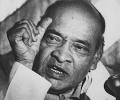
'If Rao had, in fact, given a word to President Clinton in 1994 that India would not test, he would not have encouraged Vajpayee to test. The note, said to have been handed over to Vajpayee by Rao with the words, 'Now is the time to accomplish my unfinished task' may not have been a reference to nuclear tests at all,' says T P Sreenivasan.
Libyan leader Moamer Gadaffi stirred up a storm by saying that Arab nations and even the Palestinians had the right to nuclear weapons as long as Israel's nuclear ambitions were tolerated.
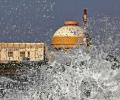
This would make India the world's second-biggest nuclear energy market after China
Expressing concern over the nuclear arms race in South Asia, a senior Democratic lawmaker, who opposed the Indo-US civilian nuclear deal, has asked the Obama administration to "encourage" India and Pakistan to sign Comprehensive Nuclear Test Ban and halt production of nuclear-weapon fissile material.
Top United States nuclear scientists have shockingly revealed in a report that Pakistan is enhancing its nuclear weapons and production capabilities.According to the report, which is yet to enter the public domain, Pakistan is readying a new nuclear capable ballistic missile for deployment and two nuclear capable cruise missiles. It is believed that this secretive and substantial arsenal build-up is targeted at India.
The Strategic Forces Command responsible for the nuclear arsenal of the country will be headed by Air Marshal KJ Mathews, who will take over from Lieutenant General Balraj Singh.
The series of tough international sanctions have weakened Iran, US Defence Secretary Leon Panetta on said on Monday, adding that even though Tehran has not taken a decision on building nuclear weapons, intelligence information says that it continues to develop their nuclear capabilities.

North Korea is unlikely to strike first, but its response in retaliation, if attacked, could be massive even at the expense of its own destruction, says Rajaram Panda.

The members of the grouping made it clear that they were against the use or threat of use of nuclear weapons and sought "peaceful resolution of conflicts."
"The pursuit of clandestine activities in respect of nuclear technologies is unacceptable and dangerous. All States must transparently live up to the international commitment that they have undertaken," he said at the conference 'Towards a World Free of Nuclear Weapons'.
In July 2008, Shivanand Kanavi had a long conversation with strategic guru K Subrahmanyam on a variety of strategic and geo-political issues -- India's nuclear weapon programme, the India-US nuclear deal, Af-Pak, India's global ambitions...
External affairs minister Pranab Mukherjee said the challenges of terrorism and nuclear proliferation were inter-connected and 'alarming aspect' was the linkages that radical terror groups have forged with 'a few nuclear scientists'.

Meanwhile, the test drew strong criticism from North Korea's neighbours and the West which warned of a robust response to its "grave provocations".
India is not converting all its weapons-grade plutonium into war heads, two top American nuclear scientists have claimed, estimating that it currently has 80 to 100 nuclear warheads for its emerging triad of air, land, and sea-based nuclear-capable delivery vehicles.

In an expected showdown, Iranian President Mahmoud Ahmadinejad and United States Secretary of State Hillary Clinton launched a verbal attack against each other at a Nuclear Non-Proliferation Treaty meeting at the United Nations on Monday.In his 35-minute speech at the NPT Review Conference, Ahmadinejad slammed Washington for bullying Tehran over its nuclear programme while not pushing the 'Zionist regime' (Israel) for getting rid of its nuclear weapons.

Denuclearising North Korea and stopping Iran from obtaining nuclear weapons are the goals of the US, said Trump.

China will use airpower to support Pakistan from the start of a war. China will use the opportunity to at least take Ladakh. Its growing navy will prevent India from blockading or attacking the Makran Coast. And thanks to Chinese weapons, Pakistan keeps expanding its forces, observes Ravi Rikhye.

The United States has said that the tension on the Korean peninsula has reached "critical time" and asked China to put "some teeth" in its policy to exert pressure on its ally North Korea to scale back on its threat of a nuclear war.

China's state media on Tuesday defended Pakistan's nuclear record, saying it was A Q Khan who was responsible for atomic proliferation which was not backed by the government and argued that any exemption to India for Nuclear Suppliers Group entry should also be given to Pakistan.
"If there had been any pride left in our leaders, they would have responded appropriately and nobody would have dared to say such things in the first place," Khan told Newsweek.

The US is alarmed and appalled by reports of security authorities responding to university students' peaceful protests with violence and mass arrests.
In 1946, the United States conducted a series of nuclear weapon tests at Bikini Atoll in what is known as Operation Crossroads.

Shaun Gregory, a professor at Britain's Bradford University and an expert on Pakistan's nuclear weapons, said though severely bruised in its own back yard, the Pakistan Army is the only determining factor that stands between the nuclear weapons and terrorist organizations such as the Al-Qaeda and the Taliban.
"I am well aware of the difficulties involved in thwarting Iran's attempts to acquire a nuclear weapon... however, it is clear to me without a doubt that dealing with the threat itself will be far more complicated, far more dangerous and far more costly in resources and human life," Barak was quoted as saying by the Haaretz online.
The new UN Security Council resolution on nuclear non-proliferation and disarmament makes it difficult for the NPT signatory countries to withdraw from the regime and calls upon nations to enter into safeguard agreements with the International Atomic Energy Agency.
Shunned for decades for refusing to relinquish its nuclear weapons programme, India was finally welcomed as a member of the global nuclear club last year when the US dropped long-standing sanctions.

Making nuclear exemptions for India, says Senator Edward Markey, 'only infuriates Pakistan and leads them to further increase their own nuclear capacities.'

Chastened by the Kargil conflict, Pervez Musharraf will be remembered for gradually lowering the profile of terrorism and seeking a realistically negotiated settlement to the issue of Jammu and Kashmir, notes Ambassador G Parthasarathy, who served as India's high commissioner to Pakistan when Musharraf seized power in a coup in October 1999.

The defence ministry on Thursday rejected senior Defence Research and Development Organisation scientist K Santhanam's assertion that the 1998 Pokhran II nuclear tests were not fully successful, adding that India has a meaningful number of nuclear weapons and an effective delivery system to go with it.
A military strike against Iran would have "unintended consequences", US Defence Secretary Leon Panetta has warned, sounding the Obama administration's strongest reservation about an attack since the release of a UN report, which suspected Tehran was working on a nuclear explosive device.
The nuclear nonproliferation lobby has urged the United States administration to ensure that America's dual-use technology is not diverted by New Delhi to its nuclear weapons programme.
India has to leverage its "swing" status, engage with all and align with none, observes Shyam Saran

India, the official said, has a long history of relations with Russia. They have interests with Russia that go back many, many decades.
Pakistan on Sunday junked as "rubbish" a report that elite US troops were ready to counter any move to hijack the country's nuclear arsenal and said it was "a figment of the imagination".

Centuries old religious conflicts may be nearing an inevitable end with the addition of nuclear warheads to their arsenal, says T C A Srinivasa-Raghavan.
India has said it was "deeply worried" over the potential nexus between clandestine proliferation of nuclear weapons and terrorism and favoured "transparent verification procedures" to prevent such materials falling in dangerous hands.
